7 月穩定性更新:強化 MCP 驗證與縮減透傳記憶體




在過去兩週,我們處理了兩個重大的產品品質問題:
- MCP Gateway 沒有單一的憑證解析類別。
- 透傳 API 的記憶體消耗過高。
在同一期間,我們總共推出了 134 個錯誤修正。這篇文章先介紹這兩個重大變更,接著說明其餘的 AI 工程與可靠性工作、完整細目,以及我們接下來要做什麼。
在過去兩週,我們處理了兩個重大的產品品質問題:
在同一期間,我們總共推出了 134 個錯誤修正。這篇文章先介紹這兩個重大變更,接著說明其餘的 AI 工程與可靠性工作、完整細目,以及我們接下來要做什麼。
最後更新:2026 年 6 月
在過去一年中,我們從使用者與社群聽到同樣的聲音:他們想要能執行的最快、最輕量的 AI 閘道。我們聽到了。現在我們正透過將 LiteLLM 遷移到 Rust 來回應,並承諾將額外負擔降到低於 1ms、記憶體低於 100MB 的可部署二進位檔。到了這次遷移完成時,您將擁有一個純 Rust 伺服器,能承載您 100% 的 AI 流量,且每個熱路徑操作(包含驗證與速率限制)都在 Rust 中執行。
我們正在開放早期 beta,並希望直接與重視快速、輕量閘道的團隊合作。如果您正是這樣,請在此註冊,我們會讓您在自己的堆疊中測試 Rust 閘道,並直接與我們團隊聯繫。
之所以重要,是因為在真實負載下,CPU 與記憶體會隨著並行度上升,而 pods 會在最糟糕的時候被 OOM-kill。今天 LiteLLM Python proxy 在負載下的記憶體峰值約為 359MB,而這個成本會隨著您執行的每個 pod、區域與重試而倍增。
我們已經在基準測試中看到成效。Rust 閘道的吞吐量約為 15x(每秒 453 到 6,782 個請求),使用的記憶體約少 11x(359MB 到 32MB),且將每次請求的額外負擔從 Python 路徑上的約 7.5ms 降到約 0.05ms,遠低於我們承諾的 1ms。
您部署單一 Rust 二進位檔。它使用約 65MB 的記憶體,閘道額外負擔維持在 1ms 以下,而您的設定中沒有任何東西會改變:相同的 config.yaml、相同的資料庫、相同的用戶端 API、相同的提供者。您保留 LiteLLM 對 100+ 個 LLM 提供者的涵蓋,並透過一個 OpenAI 相容 API 提供,包含 /chat/completions、/messages、/responses,以及 LiteLLM 今天支援的其他每個 LLM 端點,如今成為您能自行主機部署的最快、最輕量 LLM 閘道。
這不是 v2,也不是重寫。沒有新的主要版本需要遷移,也沒有任何東西要您更改。熱路徑下的執行階段會變得更快、更輕量,而您的設定會維持完全不變。
我們會以謹慎的方式發布。每條路由只有在通過我們完整的對等與端到端測試套件後才會移到 Rust,且會先在正式環境執行,然後下一條路由才開始。穩定性是優先事項,我們以每次發佈零回歸為目標。

感謝所有參加我們 5 月 town hall 的人。
我們涵蓋了安全強化、版本發布編號變更、新產品發布(MCP 工具集、on-behalf-of OAuth)、效能提升,以及我們迄今最大的一個押注——LiteLLM Agent Platform。
最後更新:2026 年 5 月
LiteLLM proxy 容器做了 2 件非常不同的事。它同時是 LLM 資料平面,/chat/completions,/v1/messages、embeddings、passthroughs,其延遲的額外負擔以個位數毫秒計算,且流量高量且突發。它也同時是 管理控制平面 — 金鑰、團隊、SSO、稽核記錄,以及驅動 dashboard 的支出/使用量分析,其中單一請求就可能掃描數百萬筆資料列。
把兩者跑在同一個 event loop 上,控制平面做得最慢的事情,就會決定資料平面最快的事情能達到的可靠性下限。這篇文章說明我們如何透過提供 componentized deployment 模型,提升 LiteLLM 在大規模下的可靠性。

我們如何透過替換單一、簡單的中介軟體基底類別,改善 LiteLLM proxy 的延遲與吞吐量
LiteLLM proxy 伺服器有兩層中介軟體。第一層是 Starlette 的 CORSMiddleware(由 FastAPI 重新匯出),這是一個純 ASGI 中介軟體。然後我們還有一個名為 PrometheusAuthMiddleware 的簡單 BaseHTTPMiddleware。
PrometheusAuthMiddleware 的工作是驗證對 /metrics 端點的請求。它預設不啟用,您可以在 proxy 設定中透過旗標啟用:
litellm_settings:
    require_auth_for_metrics_endpoint: true
這個中介軟體會檢查兩件事:請求是否打到 /metrics,以及是否已啟用驗證?如果兩項檢查都未通過——而大多數請求都是如此——它就會直接原樣放行請求。
class PrometheusAuthMiddleware(BaseHTTPMiddleware):
    async def dispatch(self, request: Request, call_next):
        if self._is_prometheus_metrics_endpoint(request):
            if self._should_run_auth_on_metrics_endpoint() is True:
                try:
                    await user_api_key_auth(request=request, api_key=...)
                except Exception as e:
                    return JSONResponse(status_code=401, content=...)
        response = await call_next(request)
        return response

    @staticmethod
    def _is_prometheus_metrics_endpoint(request: Request):
        if "/metrics" in request.url.path:
            return True
        return False
看起來無害。繼承 BaseHTTPMiddleware,實作 dispatch(),完成。這正是您會在 Starlette 文件1中看到的內容。

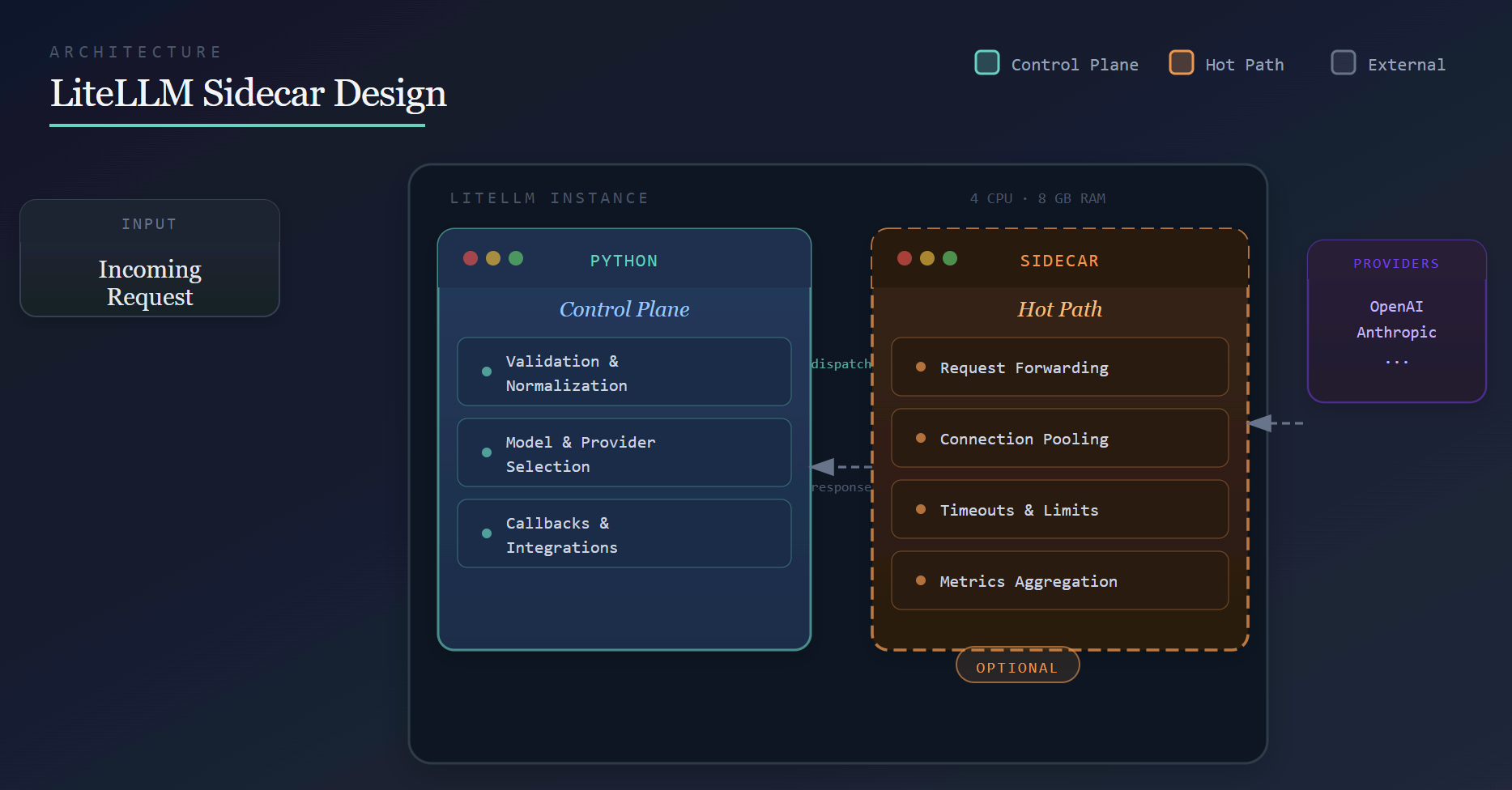
我們第一季的效能目標,是在單一具備 4 顆 CPU 與 8 GB RAM 的執行個體上,積極朝次毫秒級 Proxy 額外負擔邁進,並持續擴大這個界線。我們更廣泛的目標,是讓 LiteLLM 具備低部署成本、輕量且快速的特性。本文說明支撐這項努力的架構方向。
Proxy 額外負擔指的是 LiteLLM 本身所引入的延遲,與上游提供者無關。
為了衡量它,我們以相同的 QPS(例如 1,000 QPS)直接對提供者與透過 LiteLLM 發出相同工作負載,並比較延遲差異。為了降低雜訊,負載產生器、LiteLLM 與模擬 LLM 端點都在同一台機器上執行,確保差異反映的是 Proxy 額外負擔,而不是網路延遲。