LLM 作為裁判
概觀
| 屬性 | 詳細資料 |
|---|---|
| 說明 | 針對每個傳入請求或 LLM 回應,依加權條件以 0-100 進行評分,並封鎖或記錄低於門檻者。 |
| 提供者 | LiteLLM 原生(您代理程式上的任何 chat model,或任何提供者 model 都可作為裁判) |
| 支援的動作 | block(當分數低於門檻時回傳 HTTP 422),log(記錄判定,讓請求或回應通過) |
| 支援的模式 | pre_call(裁判在 LLM 接收請求訊息之前先評估它們),during_call(與 pre_call 相同,但裁判與 LLM 呼叫並行執行),post_call(裁判評估 LLM 回應) |
| 串流支援 | 是。失敗的判定會終止串流。 |
| API 要求 | 裁判 model 的認證資料,使用代理程式部署或提供者環境變數皆可 |
運作方式
在 post_call 模式下,防護欄會將對話與 LLM 回應連同您的條件送至裁判 model。在 pre_call 與 during_call 模式下,它改為判定最新的請求回合,而較早的帶角色標註訊息只會作為上下文傳入,因此貼題的歷史不會掩蓋離題的新回合,而較早被拒絕的回合也不會拖垮之後有效的回合。被判定的回合是請求中連續的 user 訊息,其所有文字部分會合併,並取自防護欄範圍保留的訊息(skip_system_message_in_guardrail、skip_tool_message_in_guardrail 和 scan_only_tool_results 照常適用);當請求不是以使用者回合結尾時(例如工具結果往返),或端點未提供防護欄任何逐訊息結構時,裁判會評估所有保留的請求文字。這會在任何回應存在之前執行,因此裁判可在不耗費主 model 代幣的情況下拒絕離題或不允許的請求(當裁判拒絕時,during_call 仍會並行執行主呼叫並捨棄其結果)。裁判會針對每個條件回傳判定(分數 0-100、理由、通過/失敗)以及加權總分。如果總分低於 overall_threshold 且 on_failure 為 block,請求會以 HTTP 422 失敗,並帶有完整判定;若為 on_failure: log,呼叫會繼續進行,且判定會記錄在請求的記錄中繼資料(eval_information)中,可在費用記錄與記錄整合中看到。
每個被判定的請求或回應都會額外產生一次對裁判 model 的 LLM 呼叫成本。
快速開始
1. 在您的 LiteLLM config.yaml 中定義 Guardrails
在 guardrails 區段下定義您的 guardrails:
model_list:
  - model_name: chat-model
    litellm_params:
      model: anthropic/claude-opus-5
      api_key: os.environ/ANTHROPIC_API_KEY
  - model_name: my-judge-model
    litellm_params:
      model: anthropic/claude-sonnet-5
      api_key: os.environ/ANTHROPIC_API_KEY

guardrails:
  - guardrail_name: "quality-judge"
    litellm_params:
      guardrail: llm_as_a_judge
      mode: post_call
      judge_model: my-judge-model
      overall_threshold: 80
      on_failure: block
      default_on: true
      criteria:
        - name: helpfulness
          weight: 60
          description: Is the response helpful and correct?
        - name: tone
          weight: 40
          description: Is the response professional and polite?
條件權重總和必須為 100。overall_threshold 預設為 80,on_failure 預設為 block。
若要判定請求而非回應,請設定 mode: pre_call(或設定 mode: [pre_call, post_call] 以同時判定雙方),並撰寫關於請求的條件,例如 description: Is the request about cooking or recipes?。被拒絕的請求會回傳 HTTP 422,並附上 "message": "LLM judge rejected request: score below threshold" 及如下相同的 verdicts 負載,而主 model 絕不會被呼叫。
2. 啟動 LiteLLM Gateway
litellm --config config.yaml --detailed_debug
3. 測試請求
- Blocked Request
- Passing Request
未通過條件的回應會以 HTTP 422 拒絕,並附上判定:
curl -i http://localhost:4000/v1/chat/completions \
  -H "Authorization: Bearer $LITELLM_API_KEY" \
  -H "Content-Type: application/json" \
  -d '{
    "model": "chat-model",
    "messages": [{"role": "user", "content": "hi"}]
  }'
{
  "error": {
    "message": "LLM judge rejected response: score below threshold",
    "code": "422",
    "provider_specific_fields": {
      "overall_score": 40.0,
      "threshold": 80.0,
      "verdicts": [
        {"criterion_name": "helpfulness", "score": 40, "reasoning": "...", "passed": false, "weight": 60}
      ],
      "guardrail_name": "quality-judge"
    }
  }
}
符合門檻的回應會原樣回傳。搭配 on_failure: log 時,即使失敗的回應也會回傳;判定會記錄在請求中繼資料的 eval_information 中,因此會送達費用記錄與記錄回呼。
從 Admin UI 建立 guardrail
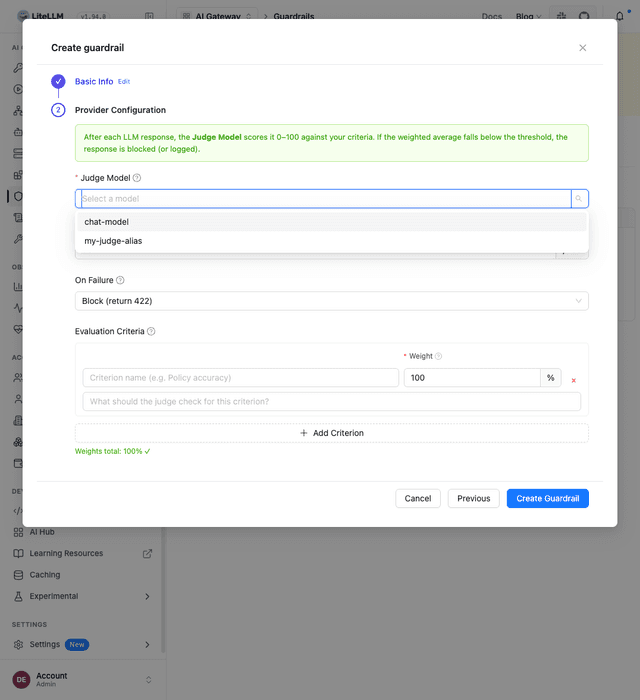
可完全從儀表板建立 guardrail:Guardrails、Add New Guardrail、提供者 "LiteLLM LLM as a Judge"。裁判 model 下拉選單會從您的代理程式 model 清單填入,而條件、門檻與失敗動作會對應到上述設定欄位。以這種方式建立的 guardrail 會儲存在資料庫中,並在啟動時載入,無須在設定檔中加入項目。
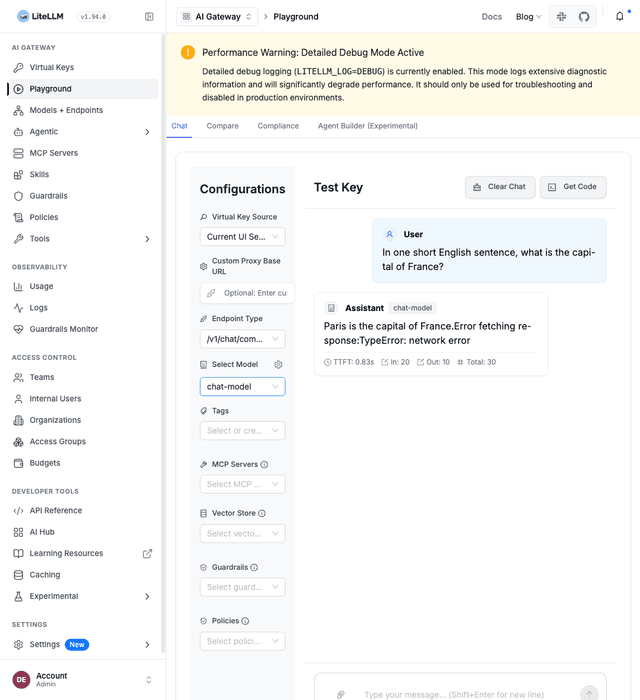
從 Playground 看到的被封鎖回應;裁判的拒絕會終止串流:
裁判 model 的認證資料如何解析
judge_model 會先根據代理程式的 Router 解析。如果名稱符合已設定的部署(精確公開名稱、例如 anthropic/* 的萬用字元路由,或 model_group_alias 項目),裁判呼叫就會透過該部署並使用其認證資料;這就是為什麼在 Admin UI 下拉選單中選取的裁判 model 可以運作,因為它們的金鑰位於部署中而非環境變數中。Router 無法提供的名稱會回退到 SDK,像任何直接的 litellm.completion 呼叫一樣,從環境變數解析認證資料。
Router 路徑有兩個值得注意的後果。如果裁判 model 名稱同時符合某個部署與有效的提供者 model id,會以部署為準,因此使用的是該部署的金鑰,而不是環境金鑰。透過部署的裁判呼叫也會像其他呼叫一樣,納入該部署的速率與冷卻計算,因此持續失敗的裁判可能會讓與使用者流量共用的部署進入冷卻。裁判呼叫本身會關閉重試與標準備援,因此設定的 judge_model 仍具權威性。
失敗行為
當裁判發生錯誤時,guardrail 採失敗開放:如果裁判呼叫失敗或回傳無法解析的判定,會記錄警告、將 guardrail 狀態記錄為 guardrail_failed_to_respond,並將回應傳回呼叫端。Markdown 圍欄的 JSON 判定(某些裁判 model 會產生)會正常解析,不會被視為失敗。只有成功解析且低於門檻的判定才會觸發封鎖。
支援的參數
guardrails:
  - guardrail_name: string          # required, unique name
    litellm_params:
      guardrail: llm_as_a_judge     # required
      mode: pre_call | during_call | post_call  # required; pre_call and during_call judge the request, post_call judges the response
      judge_model: string           # required, proxy model name or provider model id
      criteria:                     # required, at least one entry, weights sum to 100
        - name: string
          weight: number            # percent share of the overall score
          description: string       # what the judge checks for this criterion
      overall_threshold: number     # optional, 0-100, default 80
      on_failure: block | log       # optional, default block
      default_on: boolean           # optional, run on every request without being requested per-call