提示壓縮(Headroom)
Headroom 是 LLM 應用程式的上下文最佳化層。它會在工具輸出、資料庫結果、檔案讀取與 RAG 負載送達模型之前先進行壓縮,讓您只用一小部分 token 就能得到相同的答案。
此功能可在 /v1/chat/completions 與 /v1/messages(Anthropic 格式)上使用。
示範
架構
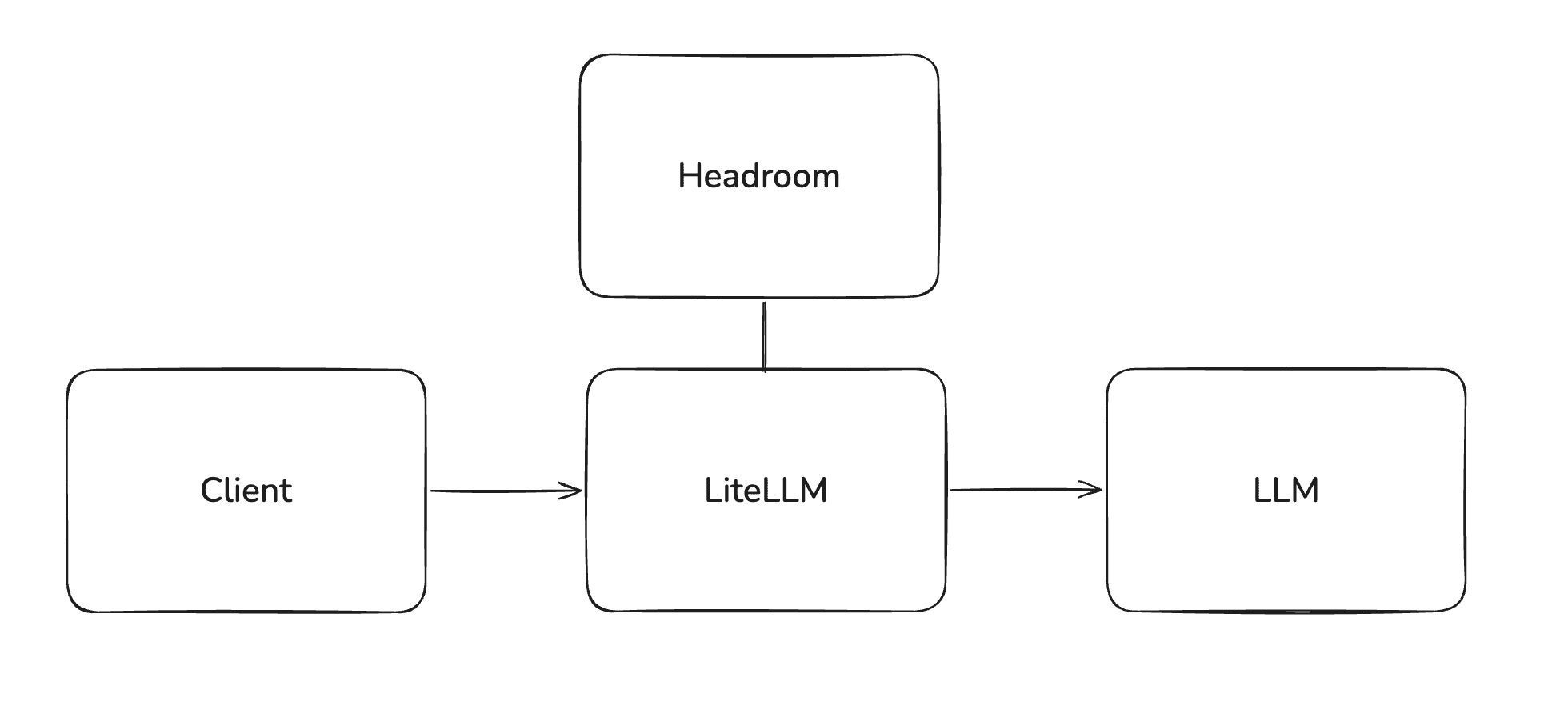
Headroom 以 sidecar 服務與 LiteLLM 並行執行。用戶端流量會照常送往 LiteLLM 閘道;LiteLLM 會在 pre_call 步驟中以進程內方式呼叫 Headroom 來重寫訊息,然後將壓縮後的負載轉送到上游 LLM。用戶端與上游 LLM 提供者不會直接與 Headroom 交談。
需求
LiteLLM v1.92.x 或更新版本,以及可連線的 Headroom proxy。請參閱下方的 部署 Headroom,可取得單一檔案 Dockerfile。
若要在穩定版釋出前進行測試,請使用 v1.92.0-dev.1 開發版。
快速開始
1. 在設定中定義防護欄
model_list:
  - model_name: claude-sonnet-4
    litellm_params:
      model: anthropic/claude-sonnet-4
      api_key: os.environ/ANTHROPIC_API_KEY

guardrails:
  - guardrail_name: headroom-compression
    litellm_params:
      guardrail: headroom
      mode: pre_call
      api_base: https://your-headroom-service
#     api_key: os.environ/HEADROOM_API_KEY  [OPTIONAL]
#     default_on: true [OPTIONAL]
只有 pre_call 才有意義;該防護欄對回應不會產生作用。
如果您希望透過 proxy 的每個請求都進行壓縮,請加入 default_on: true。若您希望壓縮採用 opt-in 方式,則請將其關閉(在向部分使用者或工作負載逐步導入時建議如此)。
2. 啟動 LiteLLM 閘道
litellm --config config.yaml
3. 送出請求
- OpenAI 格式
- Anthropic 格式
curl -i http://0.0.0.0:4000/v1/chat/completions \
  -H "Content-Type: application/json" \
  -d '{
    "model": "claude-sonnet-4",
    "messages": [
      {"role": "system", "content": "You are a helpful assistant."},
      {"role": "user", "content": "Summarize the prior conversation..."}
    ],
    "guardrails": ["headroom-compression"]
  }'
curl -i http://0.0.0.0:4000/v1/messages \
  -H "Content-Type: application/json" \
  -H "anthropic-version: 2023-06-01" \
  -d '{
    "model": "claude-sonnet-4",
    "max_tokens": 1024,
    "messages": [
      {"role": "user", "content": "Summarize the prior conversation..."}
    ],
    "litellm_metadata": {"guardrails": ["headroom-compression"]}
  }'
訊息會以 JSON 主體 {"messages": [...], "model": "<model>"} 傳送至位於 {api_base}/v1/compress 的 headroom 服務。傳回的 messages 清單會在 LLM 呼叫前取代請求負載。
依 key 啟用壓縮
當未設定 default_on 時,壓縮只會針對選擇加入的請求執行。常見的管理員做法是將防護欄附加到虛擬 key,讓使用該 key 的開發者自動獲得壓縮,而不必變更其用戶端程式碼。
建立一個已附加 Headroom 的 key:
curl -X POST 'http://0.0.0.0:4000/key/generate' \
  -H 'Authorization: Bearer sk-1234' \
  -H 'Content-Type: application/json' \
  -d '{
        "guardrails": ["headroom-compression"]
      }'
使用傳回的 key 所送出的每個請求,都會在送達 LLM 之前先經過 headroom-compression。若要附加到既有 key,請使用具有相同 guardrails 欄位的 /key/update。
依請求啟用壓縮
用戶端可在單一呼叫中選擇加入,無須管理員介入。
- OpenAI 格式
- Anthropic 格式
在請求主體中傳入 guardrails 陣列:
curl -i http://0.0.0.0:4000/v1/chat/completions \
  -H "Content-Type: application/json" \
  -H "Authorization: Bearer sk-..." \
  -d '{
    "model": "claude-sonnet-4",
    "messages": [...],
    "guardrails": ["headroom-compression"]
  }'
/v1/messages 沒有頂層的 guardrails 欄位,因此請透過 litellm_metadata 進行選擇加入:
curl -i http://0.0.0.0:4000/v1/messages \
  -H "Content-Type: application/json" \
  -H "Authorization: Bearer sk-..." \
  -d '{
    "model": "claude-sonnet-4",
    "max_tokens": 1024,
    "messages": [...],
    "litellm_metadata": {"guardrails": ["headroom-compression"]}
  }'
回應會包含 x-litellm-applied-guardrails: headroom-compression 標頭,讓呼叫端可確認壓縮確實已執行。
Claude Code 使用方式
這是最常見的導入方式:平台管理員希望為透過 Claude Code 傳送大量流量的團隊降低輸入 token 成本,而且不需要每位開發者變更其設定。
流程分為三個步驟。
管理員:在 config.yaml 中註冊 Headroom。 依照快速開始中的說明定義 headroom-compression。將 default_on 保持關閉,讓只有選擇加入的 key 才會進行壓縮。
管理員:發放附加 Headroom 的每位開發者專用 key。 每位開發者都會取得一個綁定防護欄的虛擬 key。
curl -X POST 'http://0.0.0.0:4000/key/generate' \
  -H 'Authorization: Bearer sk-1234' \
  -H 'Content-Type: application/json' \
  -d '{
        "key_alias": "claude-code-alice",
        "guardrails": ["headroom-compression"],
        "models": ["claude-sonnet-4"],
        "metadata": {"team": "claude-code-rollout"}
      }'
開發者:將 Claude Code 指向 proxy。 不需要變更程式碼;Claude Code 會從環境中讀取 ANTHROPIC_BASE_URL 與 ANTHROPIC_AUTH_TOKEN。
export ANTHROPIC_BASE_URL="https://your-litellm-proxy.example.com"
export ANTHROPIC_AUTH_TOKEN="sk-the-key-the-admin-issued"

claude
從這裡開始,Claude Code 發出的每個 /v1/messages 請求都會在傳送至 Anthropic 之前由 Headroom 壓縮。除了費用記錄上的 token 使用量降低之外,開發者不會看到任何行為變更。若要驗證壓縮是否有執行,管理員可以檢查對應費用記錄列上的 guardrail_information,或在回應標頭中查看 x-litellm-applied-guardrails: headroom-compression。
如果開發者想針對單一請求略過壓縮(例如比較未壓縮的基準),可以在該次呼叫上設定 x-headroom-bypass: true 標頭。
驗證 Headroom 是否已執行
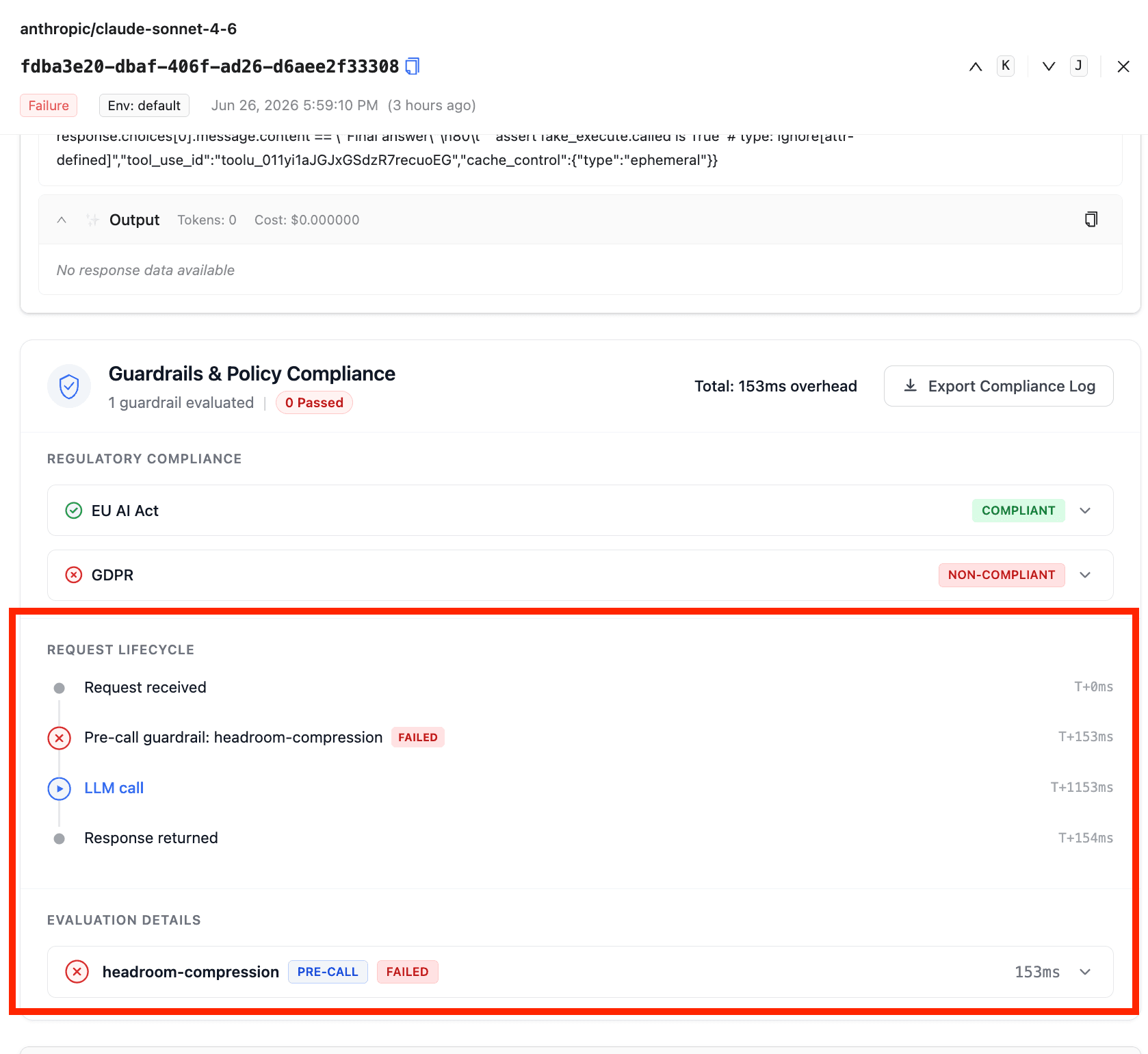
在管理員 UI 中,開啟 Logs 中的任何請求,捲動到 Guardrails & Policy Compliance 面板,您會看到 headroom-compression 列在 Request Lifecycle 下,作為一個具有其延遲時間的 pre-call 步驟,並且在 Evaluation Details 下也會有一筆項目。
部署 Headroom
以下是部署 headroom proxy 的 dockerfile
FROM python:3.12-slim

RUN apt-get update \
    && apt-get install -y --no-install-recommends build-essential \
    && pip install --no-cache-dir "headroom-ai[proxy]==0.27.0" \
    && apt-get purge -y build-essential \
    && apt-get autoremove -y \
    && rm -rf /var/lib/apt/lists/*

EXPOSE 8787
ENV HEADROOM_TELEMETRY=off
CMD ["headroom", "proxy", "--host", "0.0.0.0", "--port", "8787"]
為什麼 requests_compressed 可以是 0
Headroom 預設會保護兩種訊息類型,這是設定在 Headroom container 本身,而不是在 LiteLLM 的 config.yaml 中:
user/system訊息,除非設定了ENV HEADROOM_COMPRESS_USER_MESSAGES=1。大多數 Claude Code 流量都是user角色,因此預設部署不會壓縮其中任何內容。- 帶有 Anthropic
cache_control標記的訊息,永遠如此。壓縮它們會破壞 prompt-cache 的位元組比對。沒有可用的覆寫機制。
設定參考
| 參數 | 型別 | 說明 |
|---|---|---|
guardrail | str | 必須是 headroom。 |
mode | str | 使用 pre_call。該防護欄對回應不會產生作用。 |
api_base | str | headroom 服務的基底 URL。若未設定,則回退至 HEADROOM_API_BASE 環境變數。必填。 |
api_key | str | headroom 服務的 Bearer token。若未設定,則回退至 HEADROOM_API_KEY。選填。 |
model | str | 轉送給 /v1/compress 的模型名稱。預設為請求的 model 欄位。 |
default_on | bool | 在每個請求上執行防護欄,無須每次呼叫都選擇加入。預設為 false。 |
環境變數
| 變數 | 說明 |
|---|---|
HEADROOM_API_BASE | 當防護欄設定中未設定 api_base 時的回退值。 |
HEADROOM_API_KEY | 當防護欄設定中未設定 api_key 時的回退值。 |